


Note: I have changed the frequency of when these briefs go out. The entropy of the global order makes it difficult to detect meaningful macro signals on a weekly basis. Therefore, from now on, the briefs will follow major events disrupting the region, and consequently, Pakistan.
Summary
Pakistan brokered a ceasefire between the United States and Iran, and then watched it fall apart in under a month.
Prime Minister Shehbaz Sharif signed the June 17 Islamabad Memorandum of Understanding as the mediator who got Washington and Tehran into one room.
By mid-July that deal was dead. Iran struck ships in the Strait of Hormuz, the US answered with a naval blockade and repeated air strikes, and Iran fired missiles and drones at all six Gulf states plus Jordan.
The collapse hurts Pakistan twice over.
It reopens an energy and money problem through the Strait, and a security problem along the western border, where coordinated attacks in Balochistan and the army’s Operation Shaban restarted just as the ceasefire failed. This is a signal I will be closely watching, given its timings. The Israel-India-UAE nexus could have just as well be behind the unrest on western front, enough fomented to keep Pakistan from making any meaningful moves in the global stage.
For the next 30 to 90 days, expect an on-and-off conflict that keeps oil prices high and the security bill heavy, short of a full regional war.
Pakistan’s shield is its strongest external position in years: record remittances of $41.6 billion in FY26 and State Bank reserves of $18.47 billion.
Its weak point is that both of those numbers depend on a calm Gulf, which is now under fire.
A Deal With No Enforcer
Pakistan’s biggest diplomatic win of 2026 has been overtaken by the fighting it was meant to stop. Sharif signed the MoU on June 17. Within four weeks his Foreign Ministry had put out two statements of “deep concern” as the agreement came apart. Iran hit commercial shipping in the Strait. The US reimposed a naval blockade and ran strike after strike. Iran then fired on every Gulf state and on Jordan.
Islamabad still talks to both sides, but what the past month proved is that Pakistan has no way to hold either party to a deal once they decide to walk. The reputation gain remains. The control it implied was never there.
The money channel has switched back on. On July 13 President Trump announced a 20 percent charge on all cargo moving through the Strait of Hormuz, then dropped it a day later after Gulf states offered US investment instead. The charge lasted a day. The fear it created did not.
Pakistan’s own Economic Affairs Division has already warned Parliament that fresh escalation raises fuel costs, pushes up prices, increases how much the country must borrow from abroad, and slows growth. The disruption feeds straight into the import bill, which rose by about $4.5 billion on the back of the war, in a country that buys more than 85 percent of its oil and gas through the Gulf.
Then came the western border.
Between July 4 and 8, joint attacks by the Balochistan Liberation Army and the Pakistani Taliban killed 42 people, most of them police and soldiers. Pakistan launched Operation Shaban on July 5.
Prime Minister Sharif blamed India for paying for and arranging the attacks.
The timing is the part worth marking. The violence surged as the ceasefire broke, not before it.
Small Moves, Long Shadows
Two quieter items carry more weight than their size suggests.
On July 13 the US State Department opened a campaign to pull apart the International Criminal Court, framed around protecting Israel’s prime minister from prosecution with regards to the genocide he and his cabinet propagated in Gaza, for breaking every rule there was on UN Charter, and for gross war crimes the likes of which have not been seen. On its face this is not a Pakistan story.
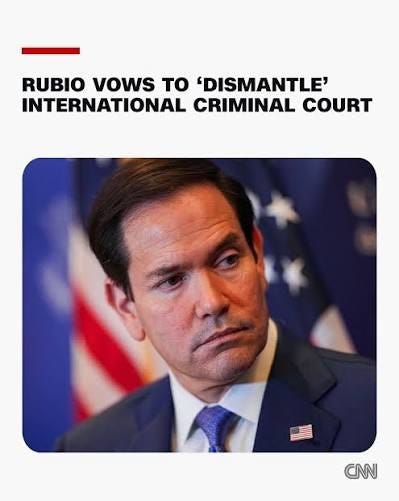
Look one step further.
Pakistan’s whole recent value came from acting as an honest broker inside a system with rules. When a major power starts dismantling that system, the currency Pakistan just spent months earning loses worth.
The second item hides inside that same EAD briefing to Parliament. The Karachi water project known as K-IV has been given only PKR 10 billion against a need of PKR 78 billion. That gap shows money being pulled toward a high-alert border and away from delivery on the ground. Slower water and power projects come first. A thinner cushion for the next shock comes after, while the shocks keep arriving.
The first hit is fuel, power, and prices. When the Strait is under threat, pump prices, electricity bills, transport, and food all move, because most of Pakistan's energy comes in through the Gulf. Over the next one to three months, anything with an energy cost inside it can climb again if the Strait stays contested. Over three to twelve months, the larger worry is the Gulf itself. Millions of Pakistanis work there, and the money they send home holds up ordinary household budgets. Their safety and their employers' stability now sit inside the danger zone. The reassurance so far is that these flows have held, reaching a record $41.6 billion in FY26 even after the war began in February.
Having said that, the timing still seems ripe for international investors. Pakistan's external buffers look better than they have in years. Reserves stand at $18.47 billion, and remittances hit a record. The exposure that still makes sense is the kind that can take an energy-price and currency shock, not the kind that leans on cheap imported inputs or calm Gulf shipping. The main risk has moved. The question is whether the region can stay short of a full war, and that is something Islamabad cannot decide. The honest base case is three more hard quarters, not a clean recovery.
The practical squeeze lands on energy cost, working capital, and imports. Any firm that runs on imported fuel, gas-linked power, or Gulf shipping should plan for higher and less predictable input costs and longer lead times over the next 30 to 90 days. Contracts priced on pre-July energy assumptions now carry margin risk. Firms with Gulf revenue or Gulf-based staff face a second layer of continuity risk on top. The safer setting is spare capacity over lean efficiency. Hold more stock of the inputs you cannot run without, and test your supply chain against a Strait closure that lasts several weeks.
What this all shows is that the fiscal space will get tighter, even as the headline reserve and remittance figures improved. The reason is that the security bill and the energy import bill are both rising at once, and they draw on the same rupees. Reform work and social spending now sit behind a larger security claim on the budget. The part that eased is access to foreign money. The part that tightened is the state's freedom to do anything by choice while running a hot border and paying an energy premium. Assume delivery timelines slip unless a project is ringfenced. K-IV is the warning already on the page.
What Could Happen Next
A long asymmetric standoff. Neither side wins outright. The US and Israel keep striking Iranian sites, and Iran keeps hitting US bases across the Gulf with cheap drones and accurate missiles while holding the Strait half-shut. Ship traffic stays thin and oil stays expensive.
For Pakistan this means a steady drain: a heavier fuel bill and a heavier security bill, quarter after quarter, with no relief but no catastrophe either.
A wider spillover. If US and Israeli strikes go deep enough, Iran could shift from hitting military bases to hitting the things Gulf societies cannot live without, their desalination plants and their oil and gas terminals. The Gulf states depend on desalinated water to survive. Damage there would empty cities and halt energy exports at the same time.
For Pakistan this is the worst case. It would cut remittances and Gulf trade together and turn both of Pakistan’s shields into open wounds at once. This path is unlikely, but this month made it more plausible than last.
A bargain. If Washington tires of the daily cost and the pressure of a coming election, it could deal directly with Tehran over Israel’s objections: blockade relief and sanctions easing in return for Iran pulling back from the Strait and diluting its enriched uranium under inspection.
For Pakistan this is the good outcome, since it reopens the Strait and steadies the Gulf. It would also leave Israel isolated and free to keep fighting on its northern border, so calm in the Gulf could sit beside a separate war in Lebanon. Pakistan would take that trade.
What to Watch
Does the Strait of Hormuz stay contested or reopen to normal traffic? This is the single largest channel into Pakistan’s economy. Energy price, import bill, currency pressure, and inflation all run through it, and they reach people and businesses first. If traffic normalizes, the base case softens toward a shock that fades. If restricted traffic runs past 30 days, the base case hardens and the import damage compounds.
Do Gulf remittances hold or start to slip? This is Pakistan’s main buffer and its main offset to a chronic trade gap. Watch the next month or two of State Bank data and any reports of Pakistani job losses or evacuations in the UAE and Saudi Arabia. A clear drop would pull away the support now holding the external account together, and would move the investor call from selective to defensive.
Does Operation Shaban stay contained or does the border violence widen? This sets the security bill and the fiscal squeeze. If attacks stay episodic, the cost is heavy but bounded. If they grow into a sustained campaign, defence spending crowds out reform and delivery, and the political risk premium climbs whatever the external numbers say.
Concluding Thoughts
Now is the time to stop treating June’s ceasefire as a turning point and start hedging for a contested Strait and a costlier border through the autumn.
Pakistan spent the spring proving it could seat two enemies at one table. The summer will test whether a state can keep a peace it has no power to enforce, while the same fire it helped bank burns along its own western wall. Geography handed Pakistan the mediator’s chair and the arsonist’s border in the same breath, and this season it must sit in both.
— Syed Ali Shehryar