

Designing Punjab's Zero-Time to Startup Policy
Lessons from Implementation Failure

In 2021, I worked on designing Punjab’s Zero-Time to Startup (ZTTS) policy. This was our attempt to reduce the time wasted on unnecessary approvals before a business could start its operations. We were up against No Objection Certificate (NOC) regime that forced investors to collect dozens of approvals before starting operations.
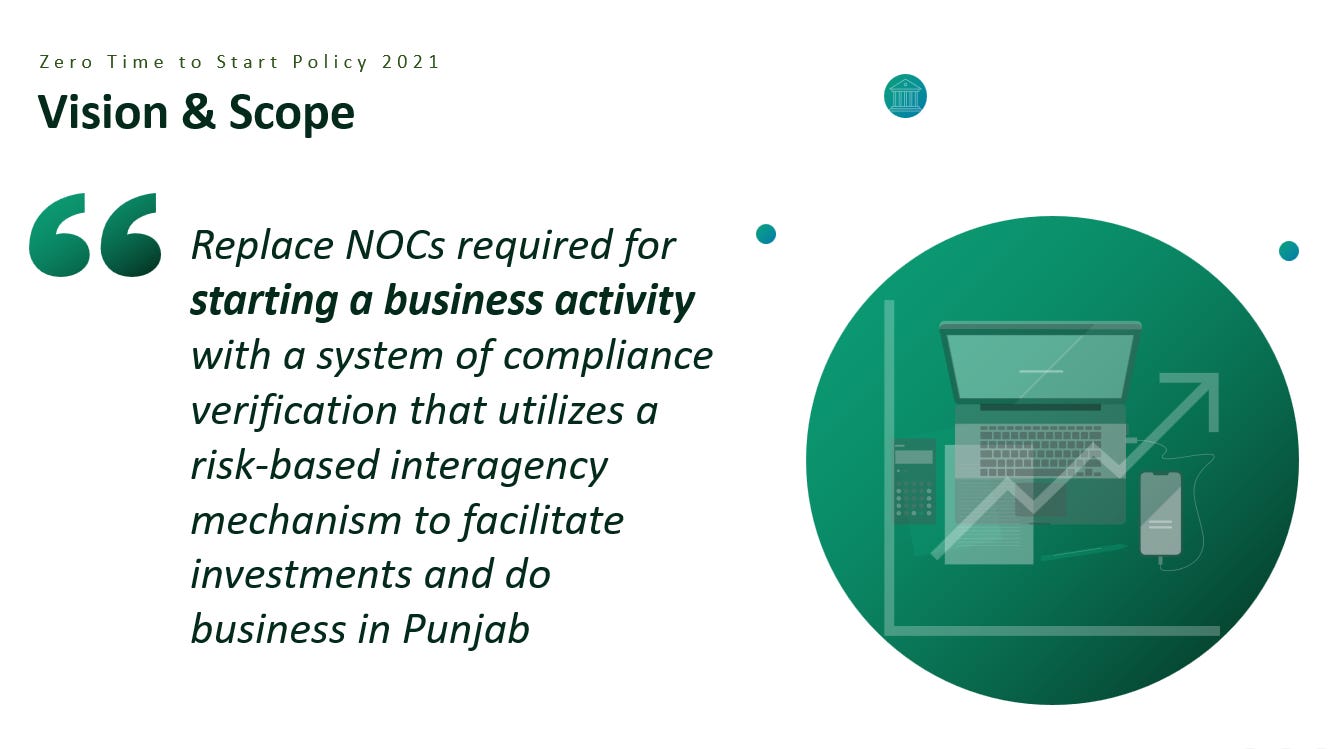
We created what we called a risk-based Compliance Verification Process (CVP) where regulators shouldered the burden of checking compliance after businesses begin.
ZTTS policy was officially launched in August 2022 with cabinet approval, political backing, and a phased implementation plan starting with a Lahore pilot. By February 2026, a new government relaunched ZTTS with similar promises about automatic approvals and instant business registration.
Four years between launch and relaunch.
That gap reveals a recurring problem in regulatory reform across Pakistan. This post explains what we built, why it stalled, and what needs to change for policy design to survive implementation.
What We Built
The core innovation was shifting from universal pre-approval to risk-tiered treatment.
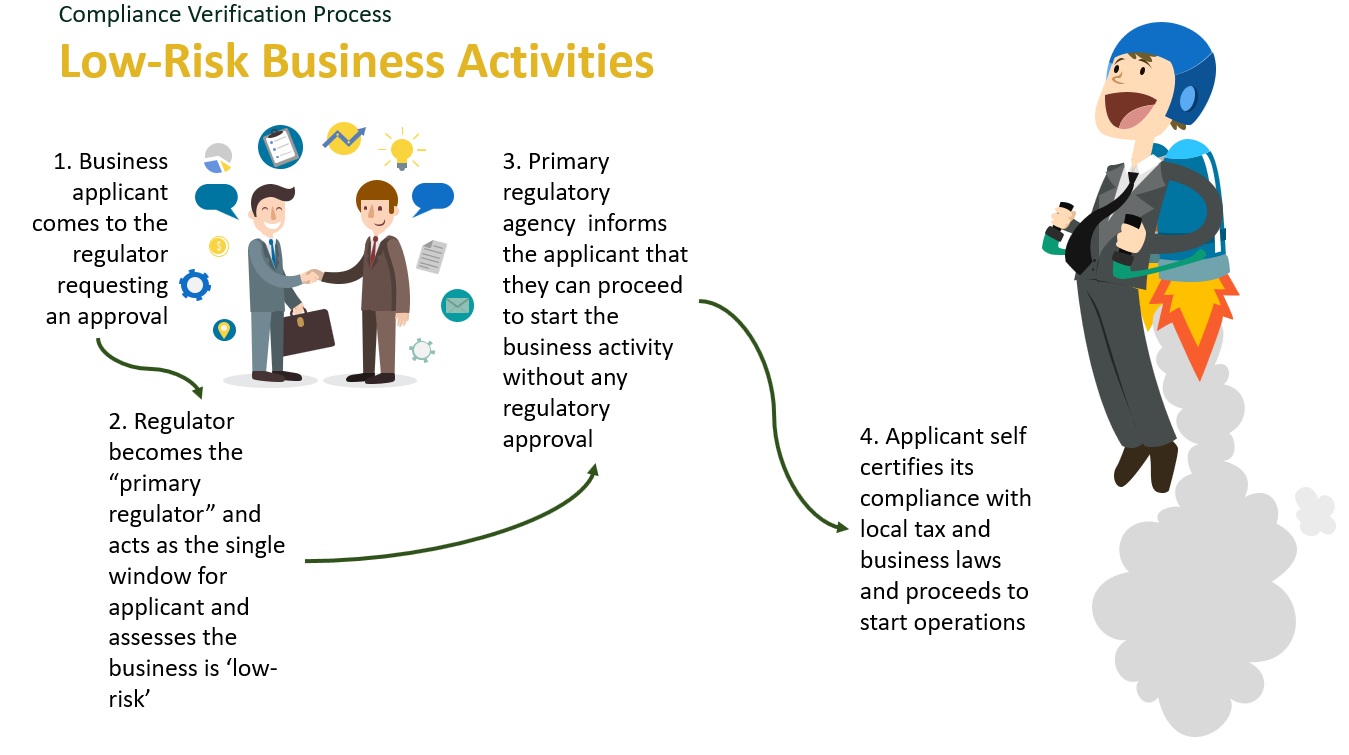
Low-risk activities (agriculture, retail trade, basic services, construction): NOCs eliminated entirely. Businesses self-certify compliance with local tax and business laws and begin operations immediately with zero government interaction.
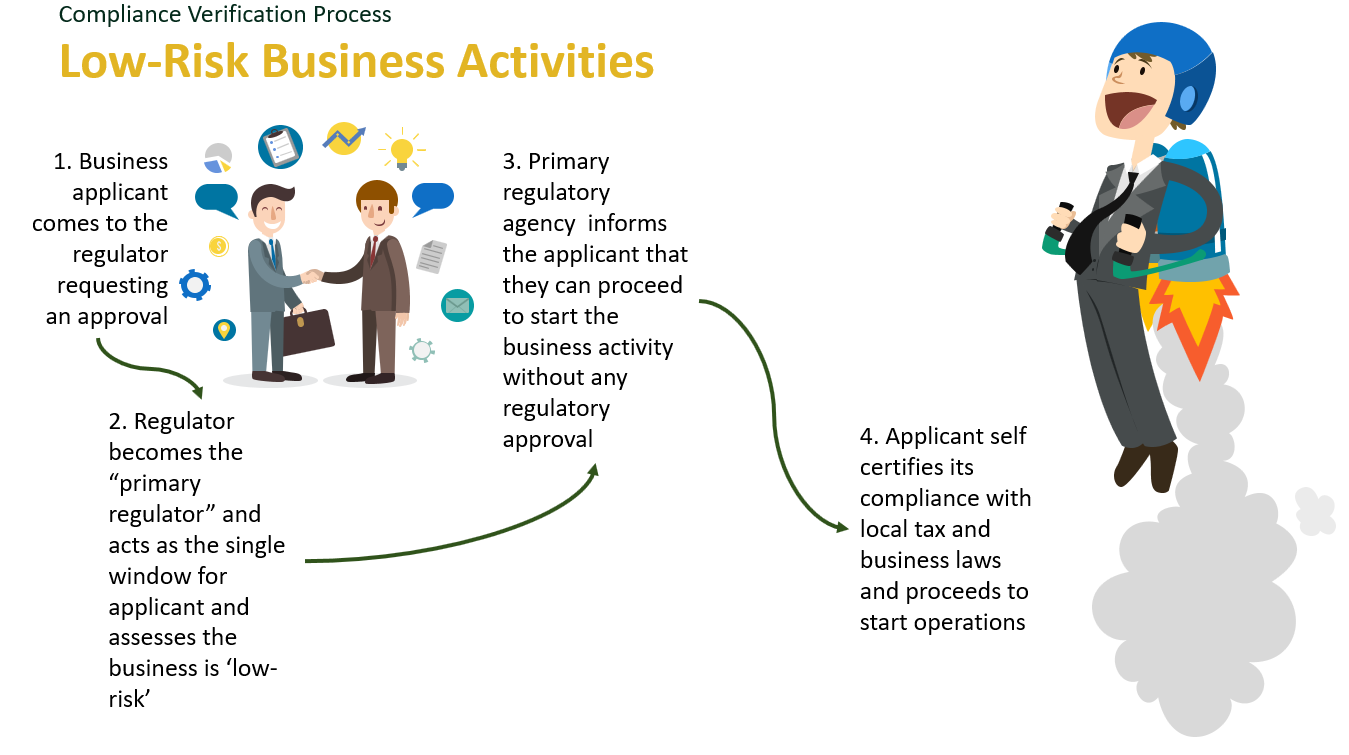
For low-risk business activities, there is no need for regulating for the sake of regulating. Medium-risk activities (livestock feed manufacturing, light industrial production): Businesses receive provisional approval and start operations while government conducts ex-post CVP within 5 days (extendable to 10 days). If verification fails, provisional approval gets suspended until compliance is confirmed.
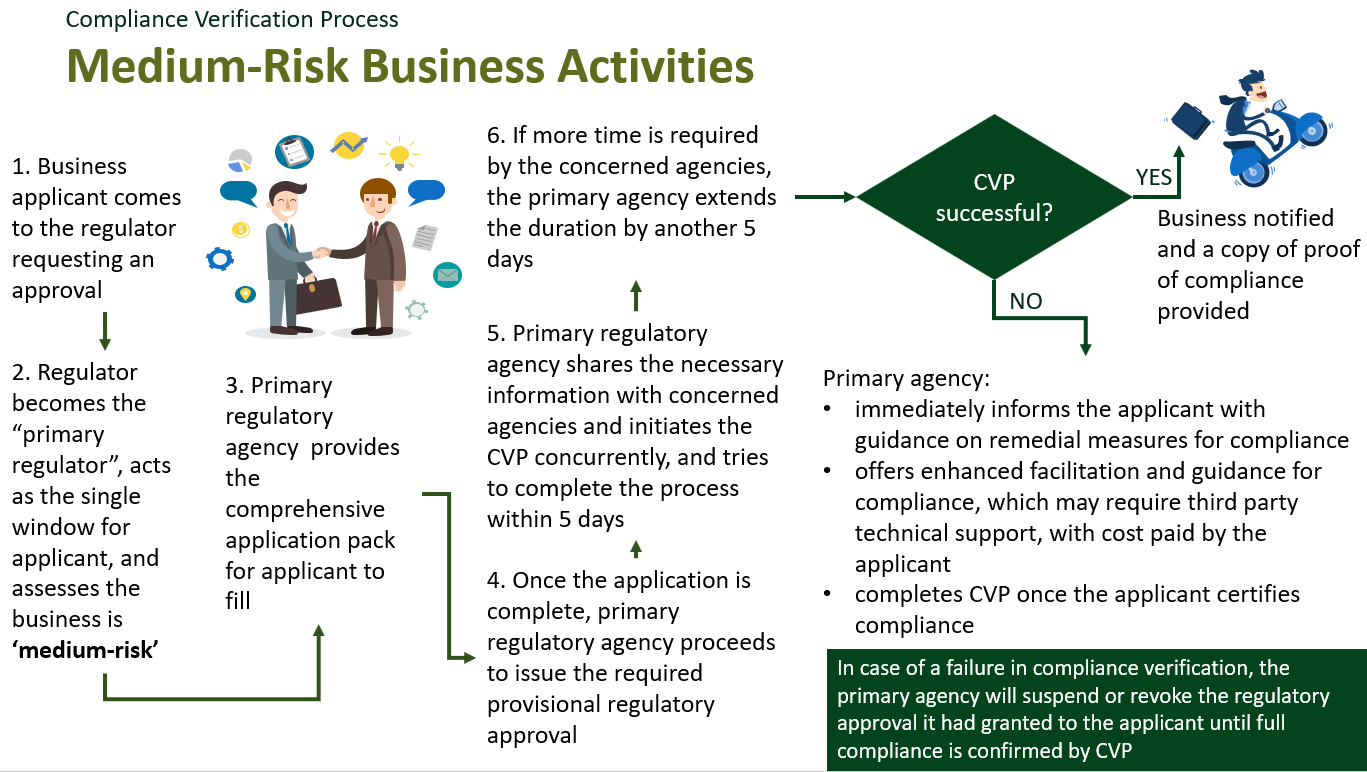
For medium-risk businesses, regulators should work as business facilitators with the added responsibility of preventing harm High-risk activities (refueling stations, heavy manufacturing, chemical production): Ex-ante verification required before operations begin. CVP completes within 15 days (extendable to 30 days). Regulatory approval granted only after successful verification.
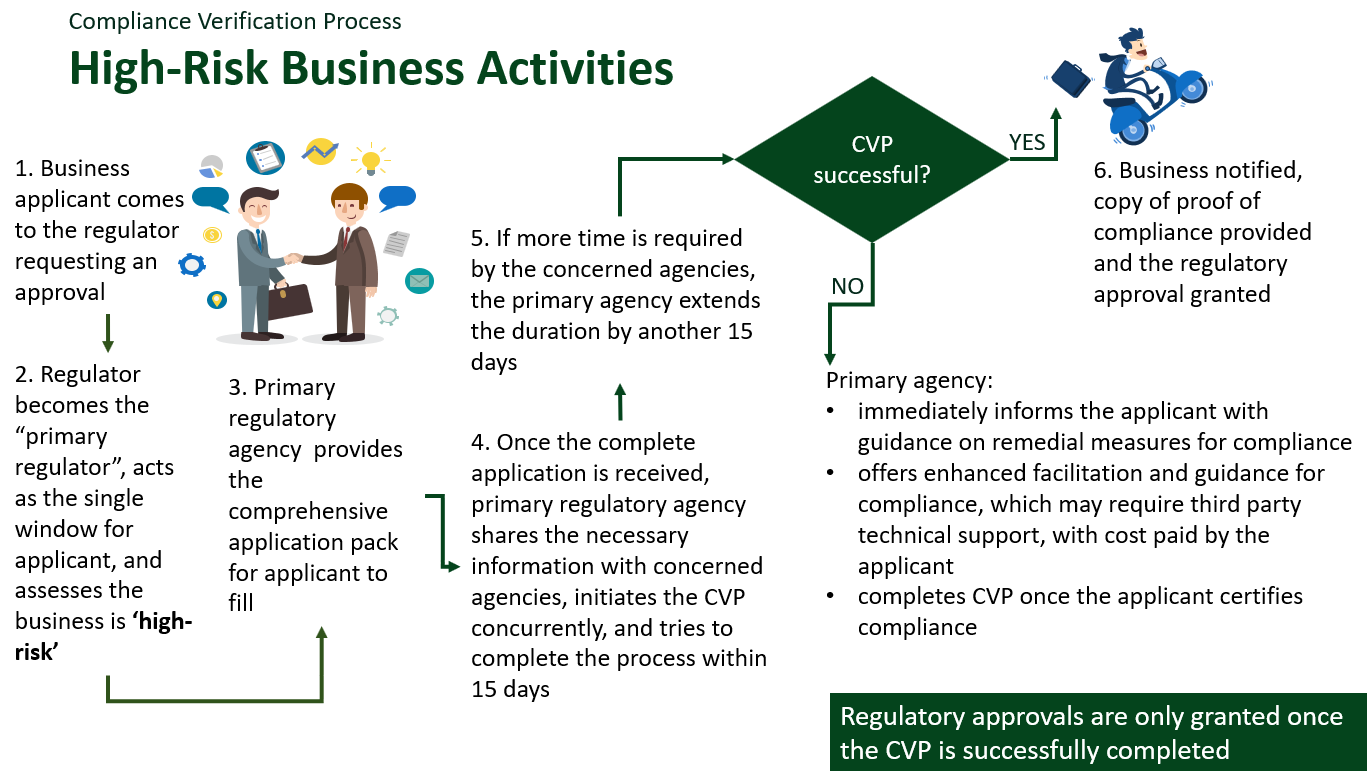
For high-risk businesses where the probability of an adverse event affecting human or environmental safety is high, regulators are at full liberty to enforce what could mitigate the risk
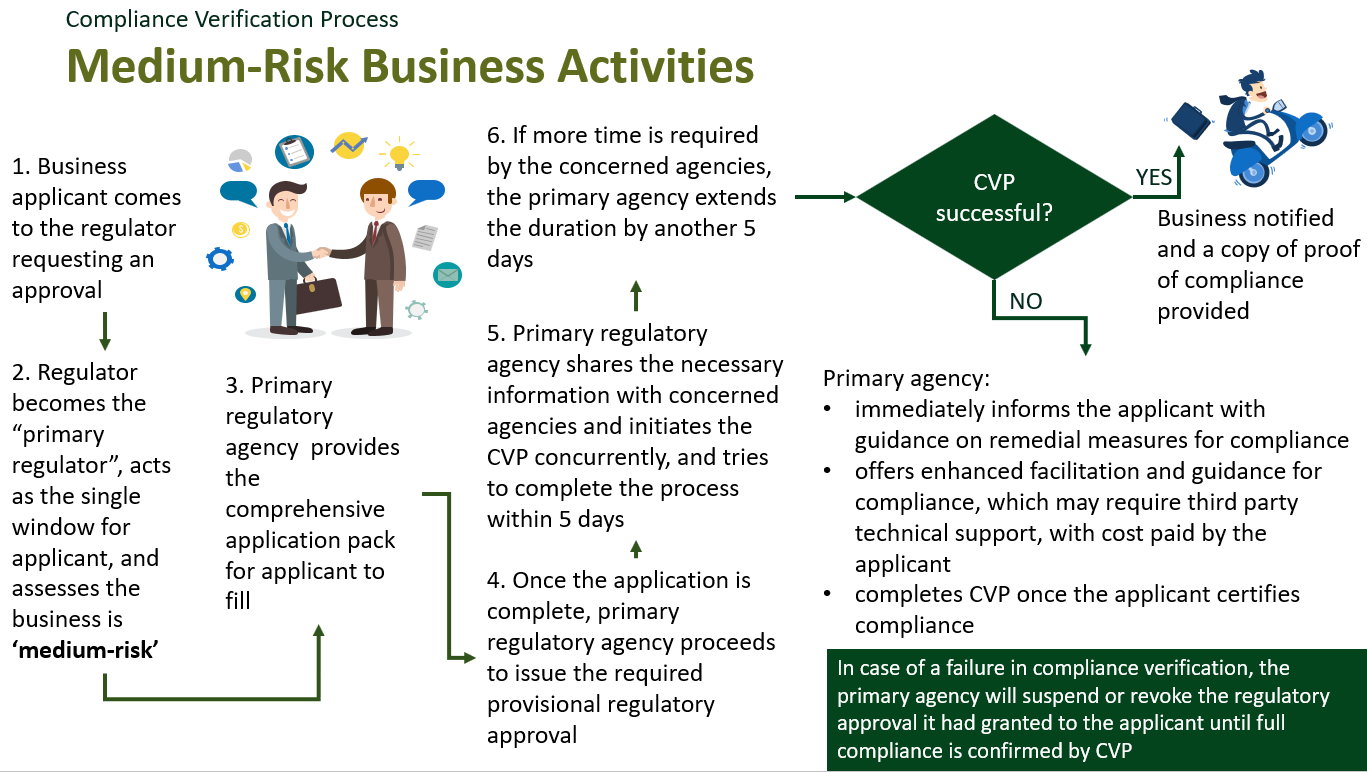
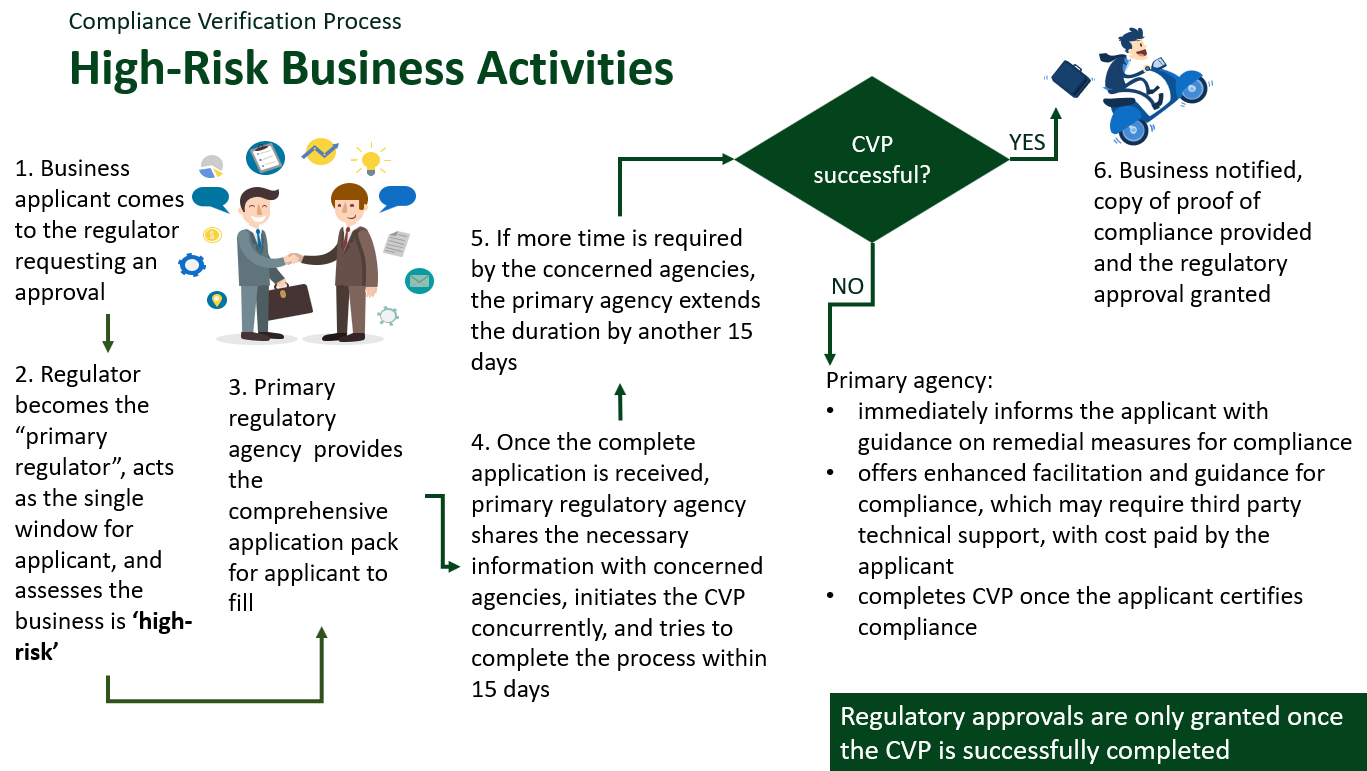
We used the Pakistan Standardized Industrial Classification to assign risk levels based on environmental, public health, and safety impact probability and magnitude. This replaced the existing system where every business activity faced the same bureaucratic process regardless of actual risk.
Our design principle was simple: Government resources should focus on high-risk activities that pose actual threats. Low-risk activities should face zero friction. Medium-risk gets monitored through post-operation checks rather than pre-operation gatekeeping.
This sounds obvious. Implementation revealed it was not.
The second design element solved the coordination problem where investors needed NOCs from 8 to 12 different agencies before any regulator would grant final approval.
Primary Regulatory Agency: Punjab Industries, Commerce and Investment Department (ICID) acts as single window. Investors submit one complete application pack to ICID. ICID coordinates with all concerned agencies concurrently rather than sequentially.
Concerned Regulatory Agencies: Punjab Environmental Protection Agency (EPA), Civil Defense, Irrigation, Energy, Livestock, Forestry, Traffic Police, Explosives Department, and others. Each receives necessary information from ICID and conducts verification within committed timelines. ICID manages coordination, conducts joint inspections where needed, and takes responsibility for completing CVP.
Under the old NOC system, businesses spent weeks collecting certificates from multiple departments.
Under CVP, ICID collects required information once and shares it with concerned agencies who complete verification within policy timelines. The compliance burden shifts from investor to government.
We recommended building service desks at e-Khidmat Centers, Special Economic Zones, and Chambers of Commerce (starting with Lahore Chamber of Commerce and Industry) to help businesses submit complete application packs. This reduced back-and-forth document requests that normally drag approvals for months. This would be followed by digitalization of the whole process.
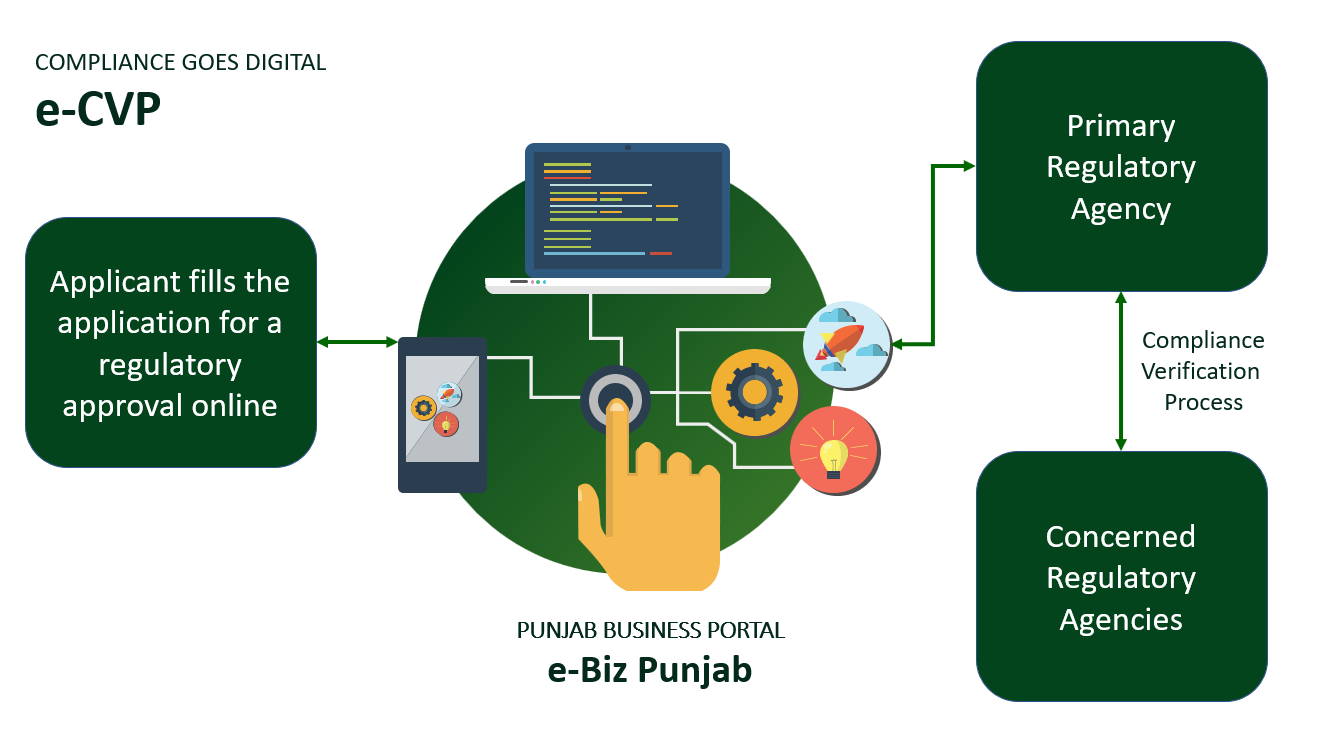
With a digital CVP, delivered through the Punjab Business Portal (e-Biz Punjab), investors would apply online, track application status live, and receive digital approvals without physical office visits. Executive dashboards for the Chief Minister, Chief Secretary, Finance Minister, Planning and Development Board Chairman, and ICID Minister would show CVP processing times, department compliance rates, and investor feedback. Regulatory agencies would publish bi-annual performance reports based on applicant feedback collected through the portal. Immediate feedback from investors prevents departments from gaming metrics through unreported delays.
That was the theory we sold to cabinet in 2021.
Why It Stalled
Standard assumption suggests that once a policy is approved and launched, success should follow.
But in Pakistan, overcomplicating processes is the prime fuel that sustains its bureaucracy and maintains their relevance.
So what happens after cabinet approval?
Departments need to issue internal notifications overriding their standard procedures. Officials need to accept post-approval risk without legal indemnity. Digital systems need to integrate across agencies with separate IT infrastructure. Political attention needs to sustain beyond the launch ceremony.
Then what happens after that?
New governments want separate political identities. Budget cycles shift priorities. IMF programs impose fiscal constraints affecting government hiring and IT budgets. Federal-provincial coordination breaks down when different parties control center and provinces.
Then what happens after that?
Voters and officials associate reforms with previous governments, and the reforms get quietly sidelined.
Departments revert to standard operating procedures.
Investors stop using the system because it does not work as advertised.
The next government relaunches the same reform with a new name.
ZTTS followed exactly this pattern.
Below, I share my observations on why the implementation broke down, and why the policy was launched again after four years but with no updates on what it did or did not achieve.
Breakdown 1: Legal Authority vs Cabinet Direction
Cabinet approved ZTTS in 2021/22. This gave political endorsement but did not automatically override legal authorities in the Punjab Environmental Protection Act, Punjab Factories Act, Punjab Local Government Act, and other statutes giving departments review authority.
Each department needed to issue formal notifications clarifying that CVP under ZTTS supersedes their standard NOC requirements for specified risk categories.
Most departments issued vague circulars that preserved discretionary review while claiming technical compliance with cabinet directions.
Why?
Because bureaucratic organizational identity revolves around exercising review authority.
Eliminating pre-approval without redefining departmental roles triggers existential threat.
Officials resist through passive non-compliance (issuing circulars that change nothing) rather than active opposition (refusing cabinet directions).
We had anticipated this and included “legal framework development” in the implementation plan. The plan was to promulgate regulations or provincial law codifying CVP and overriding conflicting departmental statutes.
This never materialized, leaving ZTTS as cabinet policy without legal force.
Breakdown 2: Risk Classification Capture
The policy success depends on keeping exception categories narrow. If environmental agencies classify 40 common industries as high-risk requiring ex-ante verification, only 10 low-risk businesses benefit from zero-time startup. ZTTS becomes meaningless for most investors.
We developed preliminary risk classifications with Punjab Local Government and Community Development Department showing low-risk and high-risk professions. The full risk catalogue covering all Pakistan Standard Industrial Classification categories required expert reviews by concerned agencies.
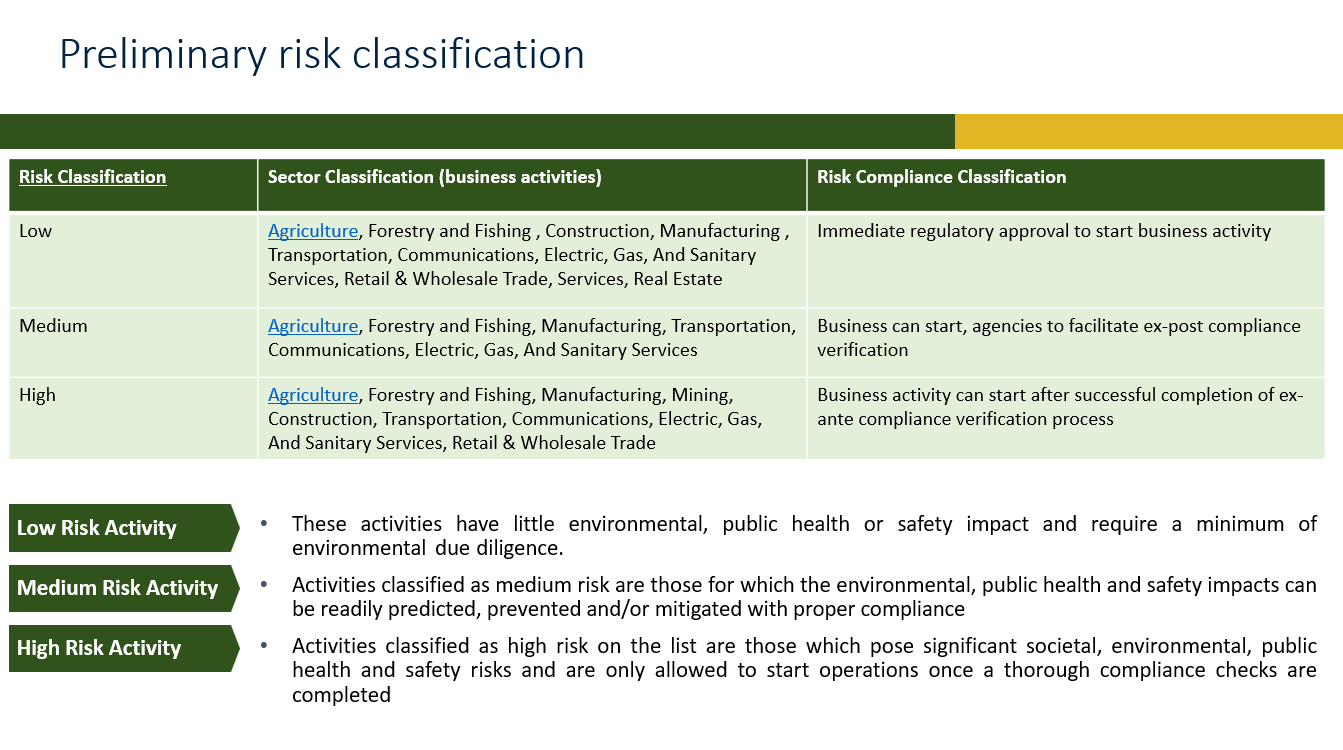
Departments have every incentive to expand high-risk classifications.
More high-risk categories means more review authority, more inspection budgets, more staff justification.
We planned continuous improvement of risk assessment approaches and catalogue updates. Without sustained political pressure and third-party expert validation, risk classifications inevitably expand toward maximum departmental control.
Breakdown 3: Managing Change with Digital Transformation
Technical implementation is easy. Punjab Information Technology Board (PITB) has the capability to build interfaces connecting ICID with concerned agencies.
Political implementation is hard.
Each department needs to agree to accept digital applications without requiring supplementary physical documents, in-person verification, or offline approval steps. Departments deriving informal revenue from in-person processing resist digital-only systems that eliminate opportunities for informal payments and expedited service charges.
The test I developed was a simple question: Can an investor complete the entire CVP without visiting any government office or submitting any physical document? If the answer is no, digital integration failed regardless of how good the portal looks.
Based on Punjab’s track record with the e-Biz Portal launched in 2020, I suspect ZTTS digital integration faced the same problem. The interface worked. Behind the interface, departments still required offline steps that undermine the digital promise.
Breakdown 4: Performance Monitoring Without Accountability
I designed mockups for executive dashboards and pushed for bi-annual performance reports based on investor feedback. The intent here was to create visibility for leadership, add transparency and broadcast accountability.
What I have come to realize is that visibility without consequences achieves nothing. If departments miss CVP timelines and nothing happens except an internal memo from ICID or Planning and Development Board, they continue missing timelines. If investor complaints get logged but never result in departmental accountability, investors stop filing complaints.
The missing element was public reporting. We needed Department A’s CVP completion rate published monthly on the Punjab Business Portal with traffic-light color coding (green for on-time, red for delays). Media, business associations, and opposition parties would use this data to create political pressure that internal dashboards cannot generate.
This required transparency commitments that most governments avoid because public performance data creates political risk when departments fail.
The Bigger Picture
ZTTS is not Pakistan’s first business registration reform or its last. It fits a pattern playing out across multiple sectors and all levels of government.
The cycle works like this:
Phase 1 (Policy Design): New government or external pressure triggers reform initiative. Consultants or technical teams provide international best practices. Inter-departmental working groups build consensus. Cabinet approves policy.
Phase 2 (Launch Ceremony): Chief Minister or relevant minister announces reform with foreign delegations present to signal business-friendly intent. Media covers. Business associations issue positive statements. Stock market responds favorably.
Phase 3 (Implementation Attempt): Lead agency (Punjab ICID, Board of Investment, SECP) builds coordination structures. Early applications receive high-level attention. Lead agencies publicize success stories. Staff escalate problems to political leadership for rapid resolution.
Phase 4 (Drift Begins): After 6 to 12 months, political attention shifts to elections, federal negotiations, budget cycles, or new priorities. Monitoring becomes less frequent. Departments revert to standard procedures. Exception categories expand. Informal requirements reappear.
Phase 5 (Silent Abandonment): The reform stays on the books without formal repeal while operational reality reverts to pre-reform normal. Investors who tried the system early stop using it because it no longer delivers promised results. New investors hear informal warnings that the official policy does not reflect actual process.
Phase 6 (Relaunch with New Name): New government or political leadership relaunches essentially the same reform with updated branding to establish separate political identity and respond to continued investor complaints. The cycle restarts.
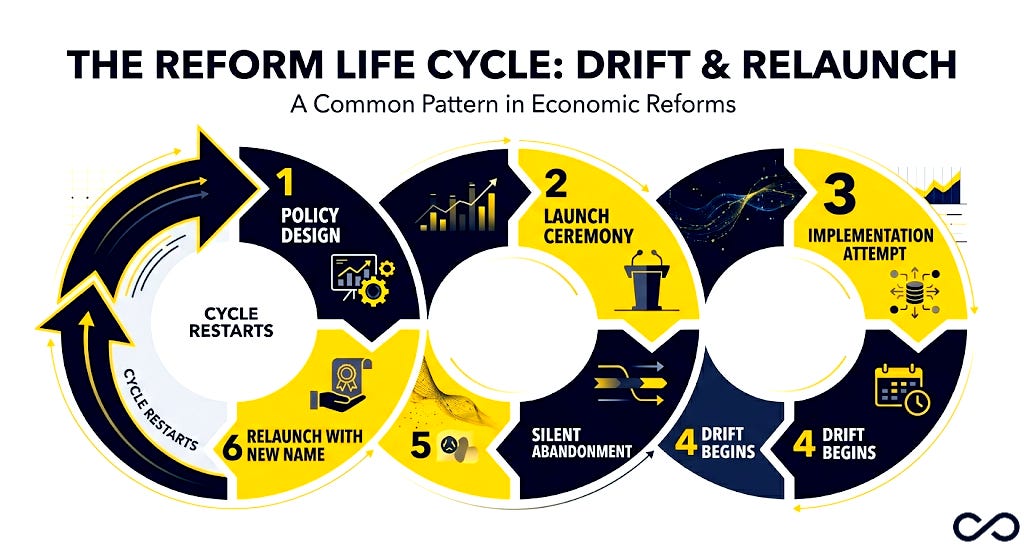
ZTTS completed this cycle. Launched August 2022. Relaunched February 2026 with similar promises. Federal Virtual One-Stop Shop (VOSS) followed the same pattern in 2019. Punjab eBiz Portal in 2020. SECP Empowering Innovation Roadmap in 2024-2025.
What happens next? ZTTS 2026 will likely follow the same trajectory unless something breaks the cycle.
The pattern exhibited by ZTTS and similar policies highlight three implications for institutional reforms in Pakistan.
Design excellence does not equal implementation success. We built a technically sound policy aligned with international practice. None of this guaranteed implementation because policy design operates in a different domain than bureaucratic politics. Design assumes rational actors following instructions. Reality involves organizations protecting turf, officials avoiding personal risk, and informal systems operating parallel to formal policy. Reformers should spend less time perfecting documents and more time on political economy analysis: who loses from reform, how they resist, what compensation removes resistance, what accountability forces compliance.
Legislation beats cabinet decisions for durability. Cabinet approval gives authority during one government’s tenure. Laws create obligations surviving political transitions because repeal requires assembly votes and public debate. We included legal framework development in our plan. It never happened. The 2026 relaunch suggests the 2022 version faded because it lacked legislative embedding. Reformers should treat legislation as the implementation milestone, not cabinet approval.
Transparency creates accountability that internal monitoring cannot. Private performance tracking produces reports seen by leadership. Public performance data creates pressure from media, business associations, civil society, and opposition. Transparency is the mechanism converting policy intent into operational fact.
What Will Success Require
Pakistan produces excellent policy documents. Technical advisors from development partners provide international best practice designs. Inter-departmental working groups build consensus. Cabinets approve ambitious reforms.
Implementation consistently fails because government does not address bureaucratic incentives, legislative gaps, transparency requirements, or political economy dynamics.
Design assumes rational implementation. Reality involves organizational resistance, informal systems, and silent non-compliance.
Breaking this cycle requires treating implementation as harder than design.
It requires legislation over cabinet decisions. Public accountability over private monitoring.
Pilot testing over full rollout.
Revenue compensation over assuming departments will accept losses.
Legal indemnity over expecting officials to accept unprotected risk.
The next reformer in Pakistan faces the same choice. Perfect the policy document and hope for implementation. Or design for implementation reality by addressing incentives, embedding in legislation, building transparency, piloting before scaling, and creating accountability mechanisms that survive political transitions.
ZTTS will succeed or fail based on that choice, if it is implemented that is.